
Introduction
Competitive gaming has become one of the fastest-growing forms of entertainment in the world. Millions of players join online matches every day to test their skills, improve their rankings, and compete against strong opponents. Whether someone enjoys first-person shooters, battle royale games, sports simulations, or multiplayer strategy games, learning the right competitive gaming strategy guide can make a major difference in performance.
Many new players believe that success in gaming depends only on quick reflexes or expensive equipment. However, experienced gamers understand that smart planning, teamwork, game knowledge, and consistent practice are equally important. A player with strong strategy can often defeat opponents with better mechanics simply by making smarter decisions.
This competitive gaming strategy guide is designed for beginners and intermediate players who want to improve their gameplay step by step. It covers everything from understanding game mechanics and improving aim to communication, teamwork, mental focus, and avoiding common mistakes. The goal is to help players build a strong foundation that can lead to better rankings, more wins, and a more enjoyable gaming experience.
What is Competitive Gaming Strategy Guide?
A competitive gaming strategy guide is a detailed system of methods, tactics, and techniques that helps players perform better in competitive video games. It explains how to improve gameplay, understand opponents, manage resources, communicate with teammates, and make smart decisions during matches.
Unlike casual gaming, competitive gaming focuses on winning consistently. Players often compete in ranked modes, tournaments, or team-based matches where every decision matters. Because of this, strategy becomes more important than random gameplay.
A strong competitive gaming strategy guide usually includes:
- Game awareness and map knowledge
- Team communication methods
- Positioning and movement techniques
- Resource management
- Practice routines
- Mental focus and discipline
- Match analysis and improvement plans
For example, in a tactical shooter game, understanding map control and timing can be more valuable than simply aiming fast. Similarly, in strategy games, predicting enemy actions can create a huge advantage.
Competitive gaming also changes regularly because developers release updates, balance changes, and new content. Players who continue learning and adapting often stay ahead of the competition.
Why is Competitive Gaming Strategy Guide Important?
A proper competitive gaming strategy guide is important because it gives players structure and direction. Instead of relying on luck, players learn how to make calculated decisions that increase their chances of success.
One major reason strategy matters is consistency. Skilled players are not successful because they win occasionally. They succeed because they can repeat strong performances regularly. Strategy helps create this consistency.
Another important factor is confidence. When players understand maps, mechanics, and tactics, they feel more prepared during difficult situations. This confidence reduces panic and improves decision-making under pressure.
Competitive gaming strategies also improve teamwork. In multiplayer games, poor communication and random actions often lead to defeat. Teams that coordinate properly usually outperform teams with stronger individual players.
Furthermore, a structured approach saves time. Many gamers spend hundreds of hours playing without improving because they practice incorrectly. A good strategy guide focuses on targeted improvement instead of mindless repetition.
Detailed Step-by-Step Guide
Understand Your Game Completely
The first step in any competitive gaming strategy guide is understanding the game itself. Every competitive title has unique mechanics, rules, maps, characters, and objectives.
Start by learning:
- Game modes and objectives
- Weapon or character strengths
- Map layouts and important locations
- Resource systems
- Movement mechanics
- Timing and cooldown systems
Spend time exploring maps in practice mode. Learn shortcuts, hiding spots, defensive areas, and high-traffic locations. Players with strong map knowledge usually react faster during matches.
Watching experienced players can also help. Observe how professionals position themselves, rotate between areas, and handle difficult situations.
Build Strong Mechanical Skills
Mechanical skill refers to physical gameplay ability such as aiming, movement, reaction speed, and control.
Improving mechanics requires focused practice. Instead of playing random matches all day, spend dedicated time training specific skills.
Useful methods include:
- Aim training exercises
- Movement practice
- Recoil control drills
- Crosshair placement training
- Quick reaction exercises
Consistency matters more than long practice sessions. Even thirty minutes of focused training daily can create noticeable improvement over time.
Players should also adjust sensitivity settings carefully. Extremely high sensitivity can reduce accuracy, while extremely low sensitivity may slow reactions.
Improve Communication Skills
Communication is one of the most important elements of competitive gaming. Teams that communicate effectively usually make better decisions.
Good communication includes:
- Sharing enemy positions
- Reporting important information quickly
- Warning teammates about danger
- Coordinating attacks and defenses
- Staying calm during pressure situations
Avoid unnecessary talking during important moments. Clear and short communication is usually more effective.
Master Positioning and Movement
Positioning can decide matches even before fights begin. Smart positioning allows players to control space, avoid danger, and gain advantages.
Strong positioning habits include:
- Using cover effectively
- Avoiding open areas unnecessarily
- Maintaining safe angles
- Staying close to teammates when needed
- Rotating early during objective play
Movement is equally important. Predictable movement makes players easy targets. Learn to move unpredictably while maintaining accuracy.
Develop Game Awareness
Game awareness means understanding what is happening during a match at all times.
Players with good awareness constantly track:
- Enemy locations
- Teammate positions
- Objective timers
- Resource availability
- Sound cues
- Map control
This awareness helps players make smarter decisions. For example, recognizing enemy rotations early can prevent ambushes.
Developing awareness requires focus and experience. Avoid distractions and pay attention to small details during matches.
Create a Smart Practice Routine
Random practice rarely produces fast improvement. A structured routine is far more effective.
A balanced practice schedule may include:
- Warm-up exercises
- Mechanical skill training
- Ranked matches
- Replay analysis
- Weakness correction
Replay analysis is extremely valuable. Watching previous matches helps players identify mistakes they missed during gameplay.
Take notes on recurring problems such as poor positioning, slow reactions, or communication issues.
Learn Team Coordination
Many competitive games are team-based, meaning individual skill alone is not enough.
Successful teams usually focus on:
- Role distribution
- Coordinated attacks
- Objective control
- Resource sharing
- Defensive support
Every player should understand their role clearly. Some players focus on offense, while others provide support or defense.
Trust between teammates also matters. Constant arguments and blame often destroy team performance.
Control Emotions During Matches
Mental control is a major part of competitive gaming success.
Many players perform poorly after becoming angry, frustrated, or impatient. Emotional decisions usually lead to unnecessary risks and mistakes.
To maintain focus:
- Take short breaks after difficult losses
- Avoid arguing with teammates
- Focus on improvement instead of blame
- Stay patient during losing streaks
- Maintain healthy sleep habits
Professional players often emphasize mental discipline because pressure increases significantly in competitive environments.
Adapt to Different Opponents
Not every opponent plays the same way. Some teams play aggressively, while others prefer defensive strategies.
A strong competitive gaming strategy guide teaches players to adapt quickly.
Pay attention to:
- Enemy habits
- Preferred attack routes
- Aggressive patterns
- Defensive weaknesses
- Timing strategies
If opponents repeatedly use the same tactic, prepare a counter strategy.
Adaptability often separates average players from advanced competitors.
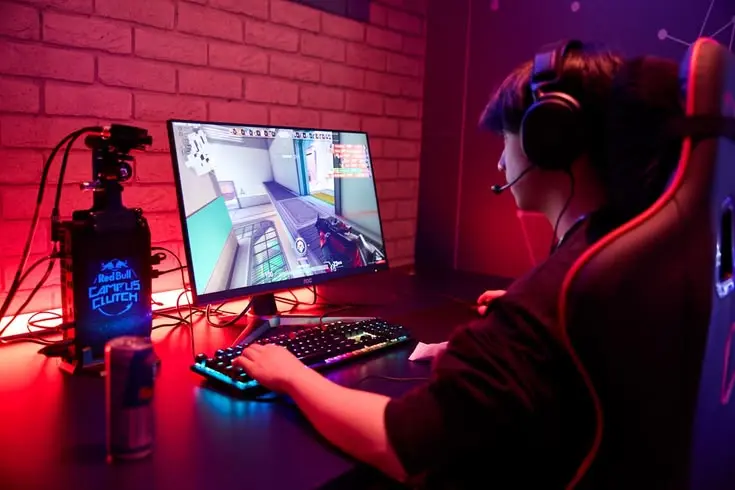
Upgrade Your Gaming Setup Wisely
Good equipment can improve comfort and consistency, although skill remains more important.
Useful gaming setup improvements include:
- Responsive gaming mouse
- Comfortable keyboard or controller
- Stable internet connection
- Quality headset
- Proper monitor settings
- Ergonomic chair and desk setup
Players should prioritize stability and comfort rather than expensive products with unnecessary features.
A reliable internet connection is especially important because lag can ruin competitive performance.
Analyze Professional Gameplay
Watching professional tournaments and high-level gameplay provides valuable learning opportunities.
Observe how top players:
- Position themselves
- Manage resources
- Communicate with teammates
- Control objectives
- Handle pressure situations
Instead of watching only for entertainment, actively study decision-making patterns.
Try applying one or two advanced techniques gradually instead of copying everything immediately.
Benefits of Competitive Gaming Strategy Guide
Following a strong competitive gaming strategy guide provides several advantages:
- Improves win rate and consistency
- Builds better teamwork and communication
- Enhances reaction speed and awareness
- Increases confidence during matches
- Helps players learn faster
- Reduces frustration and random mistakes
- Creates structured improvement plans
- Strengthens decision-making skills
- Encourages discipline and patience
- Makes gaming more enjoyable and rewarding
Players who use strategic learning methods usually improve faster than those who rely only on random gameplay experience.
Disadvantages / Risks
Although competitive gaming can be rewarding, there are also some risks and disadvantages:
- Excessive gaming may affect physical health
- Toxic environments can create stress
- Long sessions may reduce focus and energy
- Competitive pressure can become mentally exhausting
- Poor balance between gaming and daily life may create problems
- Some players become overly obsessed with rankings
- Inconsistent sleep schedules may impact performance
- Frustration from losing streaks can reduce motivation
Maintaining balance is important. Competitive gaming should remain healthy and enjoyable.
Common Mistakes to Avoid
Many players struggle because they repeat the same mistakes without realizing it.
One common mistake is blaming teammates constantly. While teammates can make errors, focusing only on others prevents personal improvement.
Another mistake is ignoring fundamentals. Some players try advanced tactics before mastering basic mechanics and positioning.
Overconfidence is also dangerous. Underestimating opponents often leads to careless decisions.
Additional mistakes include:
- Playing without warm-ups
- Using poor communication
- Copying professionals without understanding strategies
- Changing settings too frequently
- Ignoring replay analysis
- Playing while tired or angry
- Focusing only on kills instead of objectives
Players improve faster when they identify and correct these habits early.
FAQs
What is the best way to improve in competitive gaming?
The best way to improve is through focused practice, replay analysis, and consistent learning. Players should train mechanics, study maps, improve communication, and review mistakes regularly.
How many hours should beginners practice daily?
Beginners do not need extremely long sessions. One to three hours of focused practice is usually enough for steady improvement. Quality practice matters more than quantity.
Does expensive equipment guarantee better performance?
No, expensive equipment does not guarantee success. Good hardware can improve comfort and consistency, but strategy, skill, and decision-making remain more important.
Why do players lose focus during matches?
Players often lose focus because of stress, fatigue, distractions, or emotional frustration. Healthy sleep, regular breaks, and calm communication can improve concentration.
How important is teamwork in competitive games?
Teamwork is extremely important in most competitive games. Coordinated teams usually perform better than groups of skilled players with poor communication.
Can replay analysis really improve gameplay?
Yes, replay analysis helps players identify mistakes, bad habits, and missed opportunities. Watching matches carefully often reveals problems that are difficult to notice during gameplay.
Should players specialize in one game?
Specializing in one main game usually helps players improve faster because they gain deeper knowledge and experience. However, casual variety can also help prevent burnout.
What should players do after repeated losses?
After multiple losses, players should take a short break, review mistakes calmly, and avoid emotional decisions. Frustration often leads to even worse performance.
Expert Tips & Bonus Points
Experienced players often follow small habits that create major long-term improvements.
First, maintain a consistent warm-up routine before competitive matches. Even professional players warm up before serious games.
Second, focus on long-term improvement instead of temporary rankings. Players who chase only rank often become frustrated quickly.
Third, learn one improvement goal at a time. Trying to fix every weakness simultaneously can become overwhelming.
Fourth, maintain physical health. Proper hydration, stretching, and sleep can improve reaction time and focus.
Fifth, avoid comparing progress constantly with others. Every player learns at a different pace.
Additional expert tips include:
- Use headphones for better sound awareness
- Keep gaming settings consistent
- Learn from stronger opponents instead of fearing them
- Stay updated with game patches and balance changes
- Practice under pressure situations occasionally
- Build positive relationships with teammates
- Take notes on successful strategies
Players who combine mechanical skill with discipline and strategic thinking usually achieve the best results.
Conclusion
Competitive gaming is far more than simple entertainment. It requires focus, strategy, communication, adaptability, and continuous improvement. Players who approach gaming seriously often discover that smart decision-making is just as important as fast reactions.
This competitive gaming strategy guide provides a complete foundation for beginners and intermediate players who want to improve consistently. By learning game mechanics, mastering positioning, developing teamwork, and maintaining strong mental discipline, players can significantly increase their performance over time.
Improvement does not happen instantly. Every skilled competitor spends countless hours practicing, analyzing mistakes, and adapting to challenges. The key is staying patient and maintaining a structured learning process.